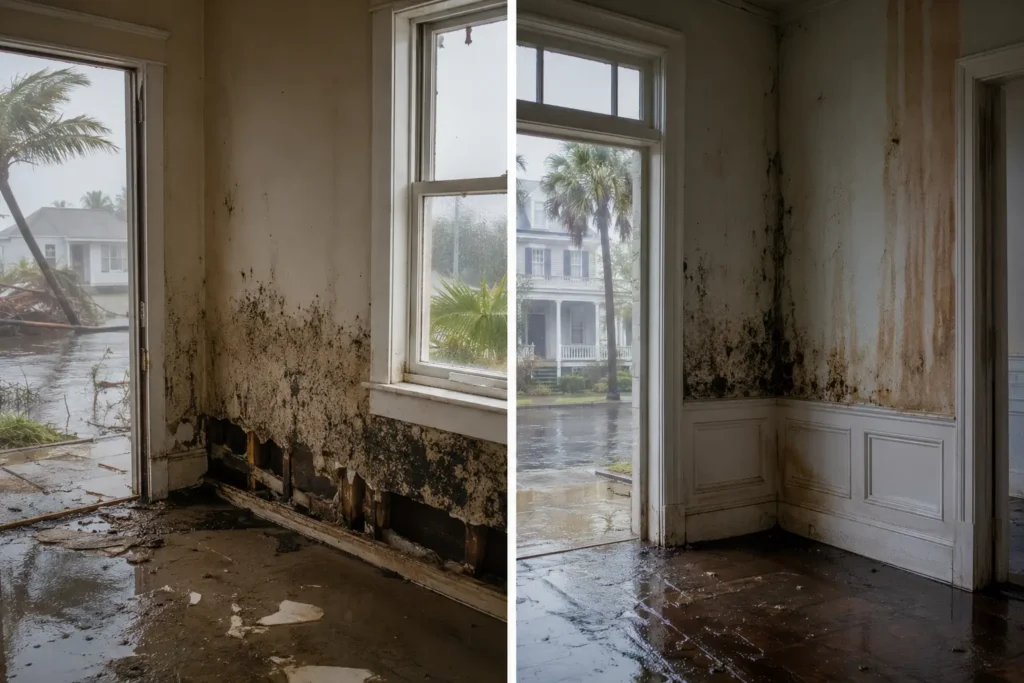
Mold after water damage Southeast homes face is unlike anything most of the country deals with – humid coastal air, warm temperatures year-round, and storm flooding create conditions where mold doesn’t give you much warning.
One day you’re dealing with a flooded floor or soaked drywall, and within 24 to 48 hours, the conditions in a Southeast home are already perfect for mold to take hold. High humidity, warm temperatures, and coastal air make cities like Tampa, FL and Charleston, SC two of the most mold-prone environments in the entire country.
This guide is written specifically for homeowners in the Southeast – not generic advice that applies everywhere, but a practical look at what actually happens when water damage leads to mold in humid coastal climates, and what you need to do about it.
Why Southeast Homes Are More Vulnerable Than Most
Most of the country deals with mold as a seasonal problem – something that shows up after a particularly wet spring or a burst pipe in winter. In the Southeast, the conditions that feed mold exist almost year-round.
Coastal humidity rarely drops below 60% even on dry days. When water damage adds moisture to walls, floors, and insulation on top of that baseline humidity, the drying window shrinks dramatically. What might take three days to dry in a Colorado home can stay wet for a week or more in Tampa or Charleston – and mold doesn’t wait.
A few factors that make Southeast homes especially vulnerable:
- Older construction – many historic homes in Charleston and established neighborhoods in Tampa use materials that absorb moisture quickly and release it slowly
- Crawl space foundations – common across the Southeast, these spaces trap humidity and often go unnoticed for days after a flood
- Year-round warm temperatures – mold spores thrive between 60°F and 80°F, which describes most of the Southeast calendar
- Storm surge and tidal flooding – water that enters a home from outside often carries sediment and organic material that accelerates mold growth compared to clean water events
Tampa, FL – When Humidity Never Really Goes Away
Tampa sits in one of the most humid corridors in the continental US. The combination of subtropical heat, frequent afternoon storms, and proximity to Tampa Bay means that moisture is a constant presence – and after any water damage event, that moisture finds its way into every corner of a home fast.
The most common mold scenarios Tampa mold remediation professionals respond to include:
- AC system leaks that go unnoticed for weeks, soaking insulation inside walls
- Roof damage after tropical storms that lets water into attic spaces
- Bathroom and kitchen plumbing failures in older tile-heavy homes where water travels behind walls
- Post-hurricane flooding where standing water sits in living areas for 24 hours or more
What makes Tampa particularly challenging is that black mold in Florida homes can begin colonizing porous surfaces – drywall, wood framing, carpet backing – within 24 to 48 hours of water contact. By the time a homeowner notices a musty smell, mold is already established behind the surface.
The mold removal process in Tampa typically involves containment first, then controlled demolition of affected materials, air scrubbing, and final clearance testing. Attempting to clean mold with bleach and fans without addressing the moisture source almost always results in regrowth within weeks.
Charleston, SC – Coastal Flooding Adds a Different Layer of Risk
Charleston deals with water damage differently than most Southeast cities. Tidal flooding, king tide events, and storm surge during hurricane season bring water into homes from the ground up – and that water isn’t clean. Storm surge from coastal flooding is classified as Category 3 contaminated water under industry standards, which means it carries bacteria, sediment, and organic material that dramatically speeds up mold colonization.
For Charleston homeowners, the window between water entering the home and mold becoming a serious structural problem is even shorter than in typical water damage scenarios. Water damage and mold removal Charleston requires crews that understand both the contamination risk and the coastal humidity conditions that follow every flood event.
A few things that make Charleston mold situations unique:
- Historic home construction – older plaster walls and wood framing absorb contaminated floodwater deeply and are difficult to dry without partial demolition
- Post-storm humidity spikes – after a named storm, outdoor humidity often stays above 80% for days, slowing drying even with equipment running
- Crawl space flooding – many Charleston homes sit on pier foundations where crawl spaces fill silently and stay wet for a week or more after surface water recedes
- Mold remediation often follows restoration – in Charleston, it’s rarely just a water damage job or just a mold job – the two are almost always connected
How to Respond in the First 48 Hours
Whether you’re in Tampa or Charleston, the first 48 hours after water damage are the most important for preventing mold. Here’s what actually matters in that window:
- Extract standing water immediately – every hour of contact increases absorption into porous materials
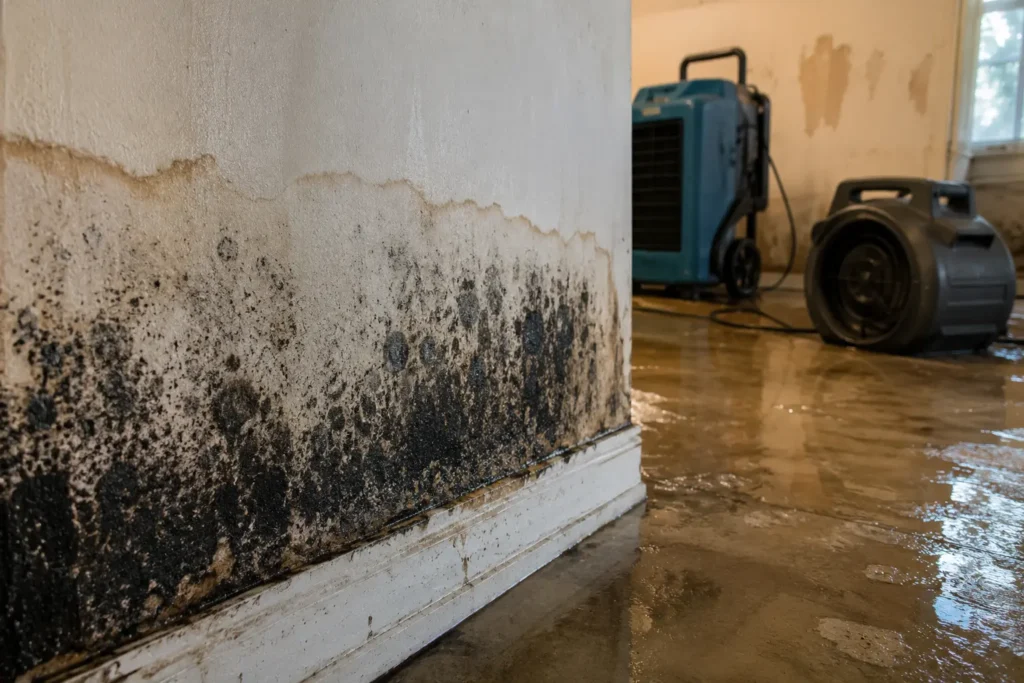
- Run dehumidifiers, not just fans – fans move air but don’t remove moisture from it. In Southeast humidity, fans alone can spread airborne spores without reducing the moisture that feeds them
- Remove saturated materials quickly – wet drywall, carpet, and insulation that stays in place for more than 48 hours is almost always a mold source within a week
- Don’t close up the house – ventilation matters, but bringing in unconditioned humid outdoor air can slow drying. A professional crew will manage airflow deliberately, not just open windows
- Document everything before touching it – photos and moisture readings are critical for insurance claims in both Florida and South Carolina
According to the EPA’s mold remediation guidelines, materials with visible mold growth larger than 10 square feet should always be handled by trained professionals – and in coastal Southeast homes, contaminated floodwater situations require professional assessment regardless of visible growth size.
The Takeaway
Mold after water damage is faster, more aggressive, and harder to control in Southeast coastal cities than almost anywhere else in the country. Tampa’s year-round humidity and Charleston’s tidal flooding create conditions where the standard advice – dry it out, wait and see – simply doesn’t work.
If you’re dealing with water damage in either city right now, the most important thing you can do is move quickly and call professionals who understand coastal climate restoration. Waiting even 24 hours longer than necessary in these conditions can mean the difference between a manageable cleanup and a full mold remediation project. For immediate help in Tampa, call (813) 909-4458.
Leave a Reply