Most homeowners think water damage is a problem that ends when the water is gone. Mop up the floor, run a fan for a day, and move on. That mindset is exactly how a manageable cleanup turns into a full-scale mold remediation job – and a bill that is several times higher than it needed to be.
The truth is that water damage and mold growth are not two separate problems. They are the same problem at different stages. Understanding how one leads to the other – and how fast it happens – is the difference between a simple dry-out and tearing out walls months later.
The Timeline Nobody Warns You About
Water damage does not sit still while you figure out your next move. It moves through your home continuously, and mold follows close behind.
Here is what the timeline actually looks like after a water intrusion event:
Within the first hour, water begins migrating beyond the visible wet area. It seeps into wall cavities, travels along subfloor joists, and wicks up into drywall. What you see on the surface represents only a fraction of where the moisture has already traveled.
Within 24 hours, saturated drywall begins to soften and lose structural integrity. Carpet padding holds moisture deep against the subfloor where air cannot reach it. Wood framing begins absorbing water into its grain. This is also when conditions for mold growth become ideal – the moisture, warmth, and organic material are all present.
Within 24 to 48 hours, mold spores that are naturally present in every home begin to germinate on wet surfaces. This is not a slow process. Under the right conditions – and a water-damaged home provides exactly those conditions – visible mold colonies can begin forming inside wall cavities and beneath flooring within two days.
Within one to two weeks, untreated moisture leads to established mold growth that has spread well beyond the original water-damaged area. At this stage, what could have been a drying job becomes a full remediation project involving containment, removal of building materials, air scrubbing, and post-remediation testing.
Where Mold Hides After Water Damage
The most dangerous thing about post-water-damage mold is that you usually cannot see it until it is well established. By the time there is a visible patch or a musty odor, the mold has already colonized surfaces you cannot access without cutting into the structure.
The most common hidden mold locations after water damage include:
Inside wall cavities where wet insulation stays damp for weeks. The exterior of the wall can feel completely dry to the touch while the interior framing and insulation is saturated and actively growing mold.
Beneath flooring materials, particularly hardwood and laminate, where moisture becomes trapped between the floor and subfloor. Hardwood flooring can appear to dry and flatten out while mold grows underneath it.
In ceiling cavities after roof leaks or upper-floor plumbing failures. Mold establishing itself in ceiling insulation often goes completely undetected until the homeowner notices staining or a persistent musty smell.
In HVAC systems when water damage affects ductwork or air handlers. Once mold establishes in an HVAC system, spores are actively distributed throughout the entire home every time the system runs.
In crawl spaces and basement areas where water intrusion events create prolonged moisture conditions that standard ventilation cannot resolve.
The Health Risk That Changes the Urgency
Mold is not just a structural problem – it is a health issue that affects the people living in the home. Mold exposure can cause respiratory symptoms, allergic reactions, and in cases involving mycotoxin-producing species, more serious health effects in vulnerable individuals including children, the elderly, and those with compromised immune systems.
The Centers for Disease Control and Prevention notes that mold exposure is associated with upper respiratory symptoms, coughing, and wheezing in otherwise healthy people, and more severe reactions in those with mold allergies or asthma. You can review the CDC’s full guidance on mold and health.
This is why water damage response time is not just about protecting your property – it is about protecting the people inside it.
Why Professional Water Damage Restoration Prevents Mold
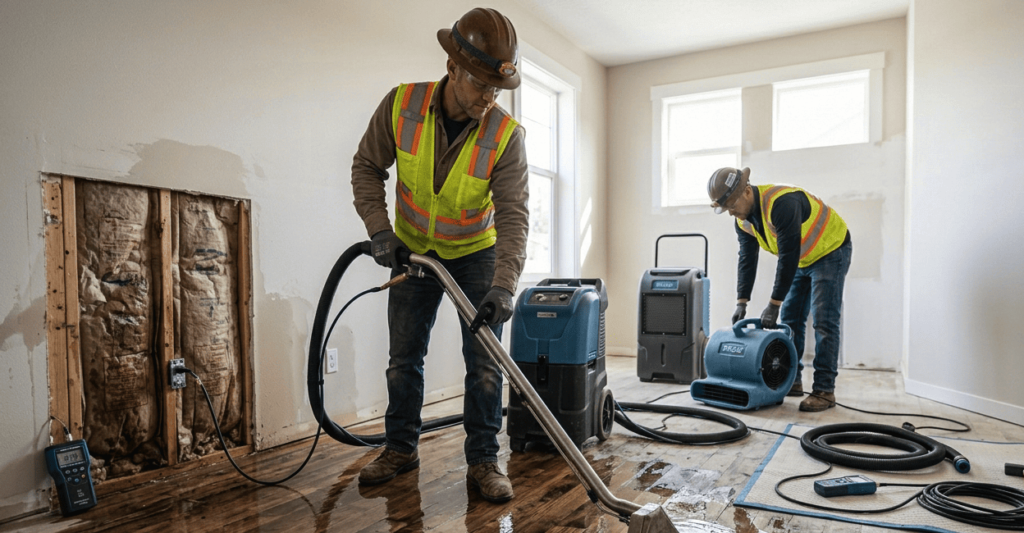
The key difference between DIY water cleanup and professional restoration is not effort – it is equipment and process. Consumer-grade fans and dehumidifiers do not move enough air volume or remove enough moisture to dry structural materials within the critical window. Professional restoration equipment is engineered specifically to achieve structural drying targets before mold growth can establish.
A certified water damage restoration team uses thermal imaging and moisture meters to map exactly where water has traveled – including inside walls and beneath flooring that appears dry. They place industrial air movers and commercial dehumidifiers based on that moisture map, take daily readings to confirm drying progress, and apply antimicrobial treatments to inhibit mold growth during the drying period.
This process, done within the first 24 to 48 hours, is what prevents water damage from becoming a mold remediation project. If you are dealing with water damage outside the Tampa area and need certified restoration handled fast, the team at Little Rock AR Water Damage provides 24/7 emergency response with full structural drying from extraction through final clearance testing.
When Mold Remediation Is Already Necessary
If water damage went untreated for more than 48 to 72 hours, or if a slow hidden leak went undetected for weeks or months, mold remediation rather than simple drying may already be required. Signs that remediation is needed include a persistent musty odor even after apparent drying, visible mold on walls, ceilings, or flooring, occupants experiencing unexplained respiratory symptoms, or moisture readings that remain elevated despite drying attempts.
At this stage, the scope of work expands significantly. Remediation involves containment of the affected area to prevent spore spread during removal, physical removal of contaminated building materials including drywall, insulation, and flooring, HEPA air scrubbing to capture airborne spores, antimicrobial treatment of affected structural surfaces, and post-remediation verification testing to confirm clearance before reconstruction begins.
This is precisely what a mold remediation company handles – and why calling one immediately after water damage is discovered, rather than waiting to see what develops, is always the lower-cost and lower-risk decision.
Water damage becomes a mold problem on a timeline measured in hours, not weeks. The homeowners who avoid mold remediation after a flood, leak, or pipe failure are the ones who called a professional restoration company within the first day – not the ones who waited to see if things dried out on their own.
If you have experienced water damage, the clock is already running. Get professional extraction and structural drying started immediately, and you give yourself a real chance of resolving the problem without mold entering the picture at all.
Leave a Reply